Manufacturing process
Nine stations between a coil of steel and a sealed carton.
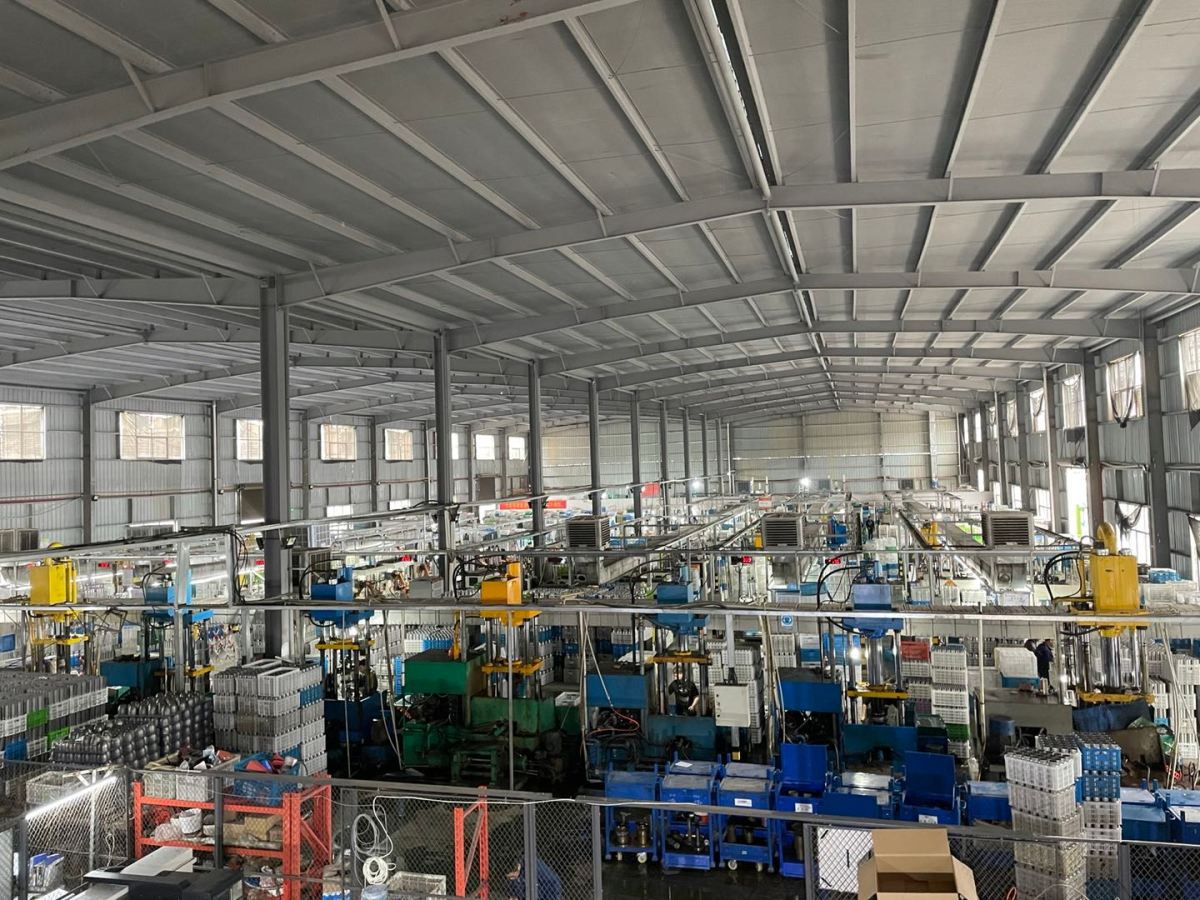
Every drinkware family runs the same spine, with two or three stations swapped depending on the material. The gate names below are the ones you will see on our batch record.
The spine
From tooling to loading.
- 01
Tooling
Drawing or sample → 3D → mould. Existing moulds are used where the geometry allows, which is what keeps a first order affordable.
- 02
Blanking & forming
Steel coil is cut and drawn into the body and the inner shell. Plastic parts are injection moulded on the same site.
- 03
Welding
Longitudinal seam and the base are welded, then the outer and inner shells are joined at the neck.
- 04
Vacuum
Air is evacuated between the walls and the port is sealed. 100% of bodies are vacuum-loss checked, not sampled.
- 05
Polishing
Weld dressing and surface preparation. This station decides whether the paint looks like paint or like a coating that has been sprayed on.
- 06
Coating
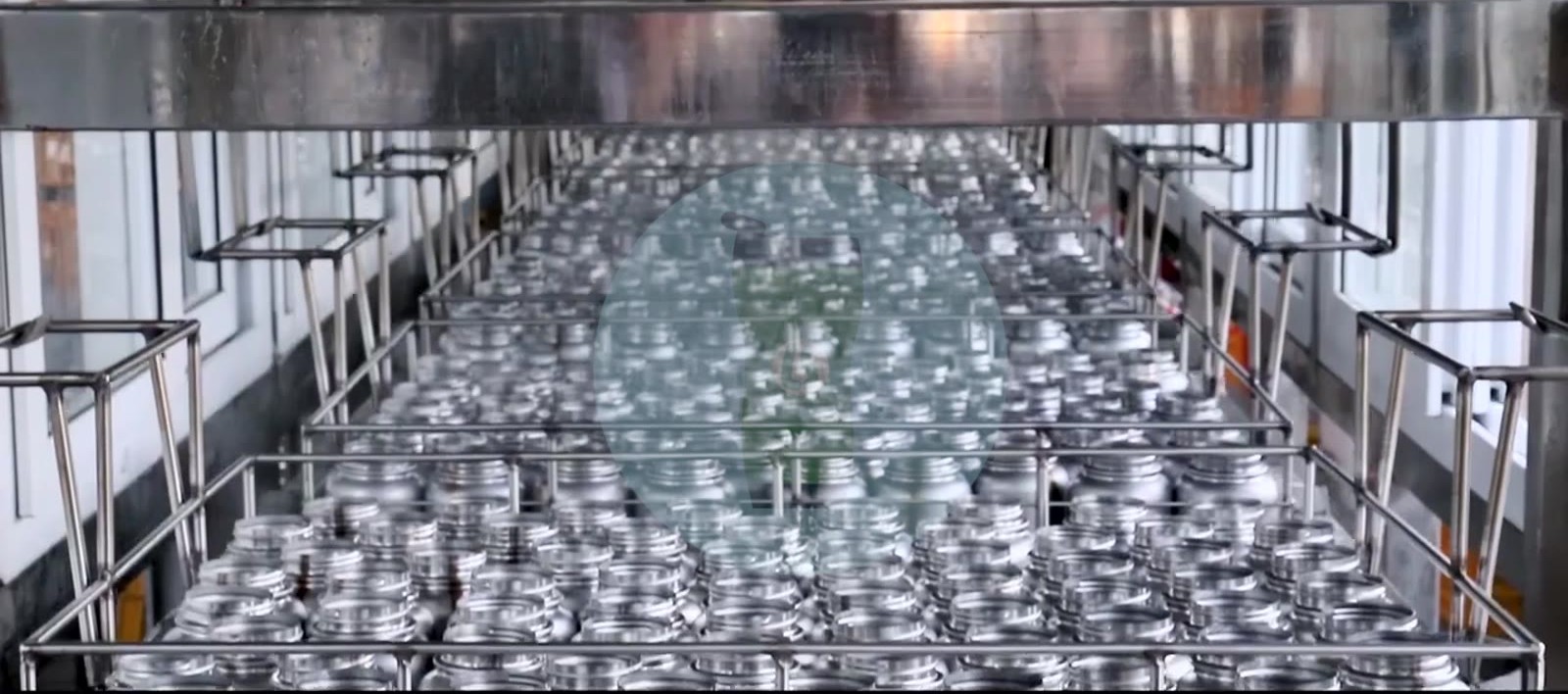
Powder coating or paint, cured, then checked for film thickness, colour and adhesion before it moves on.
- 07
Decoration
Laser, silkscreen, UV or heat transfer. Registration and cure are checked on the first 50 pieces of every setup.
- 08
Assembly & test
Lid, gasket, straw and handle assembled; leak and insulation tests run per batch; AQL inspection on finished goods.
- 09
Packing & loading
Polybag or retail box, carton drop test, carton photographs to the buyer, then the loading plan is built around your retail mix.
Timing
Where the calendar actually goes.
A 3,000-piece order with an existing mould is a different animal from a new mould. The difference is almost entirely stations 01 and 06.
What each station costsExisting mould, stock colour
Existing mould, custom colour
New mould
Chinese New Year and summer peaks
Start with the station you are unsure about.
Most specifications only need one or two questions answered before they can be quoted. Send the part you are least sure of.